


Describing bold, majestic things is easy. Hyperbole, for example, might be used to describe something tremendous, like the Alps.
The Alps are jagged stone monsters that tear the sky open and brush the atmosphere with their icy crowns.
A single ridge from this mountain range holds enough crushing snow and infinite rock to bury whole empires without leaving a trace.
The point of this example is that describing something like the Alps is to describe the obvious. Hyperbole, though, is not required:
The jagged granite peaks of the Alps reach into the highest air, topped with thick, perpetual ice.
Sharp granite spires rise straight into the clear upper sky, capped with year-round ice that glints in the sun.
The high granite peaks stand cut against the sky, covered in heavy, permanent ice.
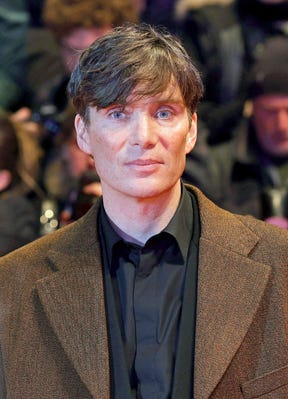
Similarly, describing extraordinary features on an unusual man allows you freedom. Let’s use Cillian Murphy (star of Oppenheimer) as an example.
His translucent blue eyes burn with an intensity so blinding they could scorch a hole through a tungsten wall from three miles away.
He possesses a jawline so impossibly sharp it could slice a diamond clean in half with a single turn of his head.
Is that over the top? Of course it is. Somehow it’s also true, sort of. Hyperbole does that.
And, again, someone with unusual features does not require strong observational skills.
What if where you are looking is more plain, and the person you are writing about is the epitome of average?
How do you describe that person without falling into cliché hyperbole of blandness, or forcing your reader to fall asleep?
This becomes the opposite of the extraordinary. Observational skills are required, attuned with a sense of detail.
The first thing you need to remember is that your mundane scene is not necessarily mundane to your reader. That cornfield that you’ve seen a thousand times driving through the Midwest, the one that goes for miles before you get to a gas station?
That’s fascinating to a person who has never seen corn. Having lived in a community that was surrounded by corn and soy fields, after having grown up in a suburb next to a major metropolitan city, I personally find cornfields fascinating. And to help put myself through college, I worked in a grain elevator that processed soybeans. I grew to appreciate that mundanity by experiencing it up close.
That boring-looking person? If you grew up in the outskirts of Minneapolis, you might see a lot of blonde people. Norwegian, Swedish, German, and so on. If you were among those people, those people would seem exceedingly boring inasmuch as they are family and friends. Minnesota—including the outer suburbs and rural areas surrounding the Minneapolis–Saint Paul metropolitan area—has one of the highest concentrations of blonde hair in North America. Sure, you’ve got a few anomalies like Prince and Bob Dylan, but traditionally you’re looking at blondes, blondes, and more blondes.
Let’s think about an imaginary woman named Sarah. She could be your main character.
Her cheeks radiate a rosiness so blindingly luminescent they could guide a lost cargo ship through a thick Great Lakes fog.
She wears a fleece jacket woven with a fiber density so thick it could comfortably withstand the freezing thermal conditions of deep outer space.
Her bright, sun-bleached hair shines with a radiance so brilliant it instantly melts every lingering drift of snow within a fifty-mile radius of her path.
Does she really look like that? Yes and no. Her cheeks might be rosy, and that’s partly in contrast to the fact that she has lighter skin than, say, someone who’s Italian. Plus, you can add in the fact that it’s colder up that far north. Rosy cheeks are just part of living there, but they aren’t part of living everywhere. Not to this extreme.
I’ve worked in a reference to the Great Lakes. Lake Superior is connected to Minnesota. That roots it in a real place. It helps build the visual.
Let’s rethink that without hyperbole. You don’t necessarily need to hit the reader hard with stereotypes.
Bright rosy cheeks instantly warm her face, giving her the classic look of someone who thrives in crisp Northern air.
She wears a heavy fleece jacket tailored to keep out the chill during long Minnesota winters without sacrificing style.
Her sun-bleached blonde hair catches the midday light, offering a vibrant burst of color against the stark Midwestern backdrop.
You’ve described her straightforwardly. It’s kind of boring, but why? Everything there is accurate, natural, and relatable. It’s not terribly specific, and it could describe any generic Scandinavian woman living in Minnesota. You don’t want to overplay that genericism, but work through it and find your character within her. The story isn’t about her blond hair or her rosy cheeks. It is about how she laughs at inappropriate times, the way she’s underestimated as cop, or the fact that she just invented a method to see five minutes into the future. It’s about how she’s missing an eyebrow, loves Lightnin’ Hopkins (as one should), or speaks Japanese fluently.
If you’re writing a novel or even a short story, you’ll have other ways of describing Sarah. You’ll do this as she interacts with other characters, which will provide complement and contrast, and how she exists within the story.
We’ll learn about her voice, her mannerisms, and the kinds of things she says. Depending on the story, her location will also tell us a lot. For example, if she’s a teacher, you’ll talk about how she’s in front of the room teaching whatever the subject is. If she’s a corporate executive, you can describe her office or a cubicle.
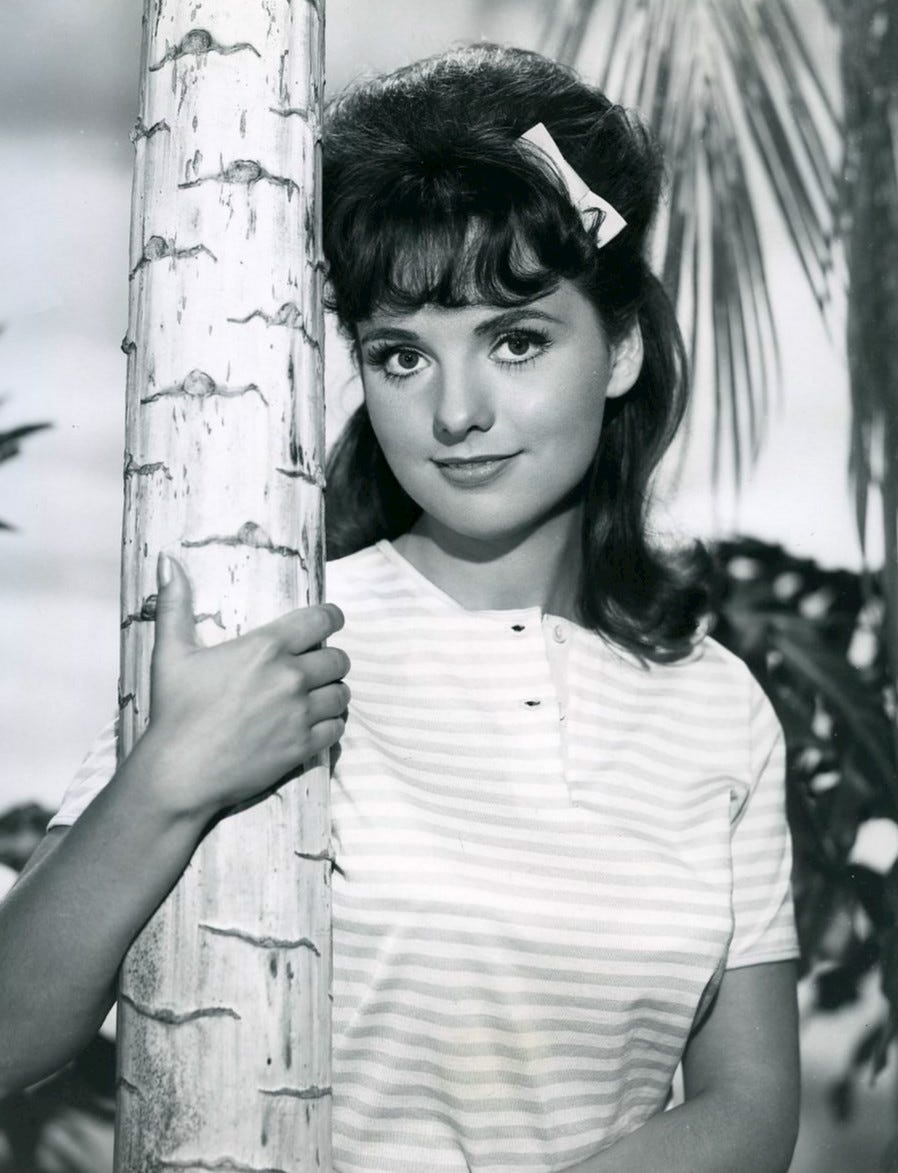
Your mundane character is both amazing and relatable. If you remember the old TV show Gilligan’s Island, you might remember Mary Ann Summers. Her character, prior to being shipwrecked, worked at the fictitious Winfield General Store located in the very real Winfield, Kansas. In the ensemble cast, she was directly contrasted against the character Ginger Grant (the movie star). Ginger was aloof and subtly arrogant. Mary Ann was the girl next door.
How boring was Mary Ann? She came across as a small-town girl, an ingénue, in the context of the show, one of the most popular characters. She wasn’t boring because she was like us. Relating to the other characters might be difficult: the movie star, the professor who knew everything, the business magnate and his wife, the tour boat captain, or the accident-prone first mate.
Granted, the eccentric cast of Gilligan’s Island worked wonderfully together, but Mary Ann is the one we related to. She gave the characters realistic balance and kept the show from becoming a circus. Sure, even though it was a ridiculous setup for a sitcom, we still needed that so-called boring character.
No single characteristic brought us to love Mary Ann. The writers slowly slipped in where she grew up, her homespun persona, her domestic skills, and her down-to-earth perspective, one episode at a time. She could bake without an oven, manage the agricultural needs of the castaways, and mediate difficulties between Hollywood divas and the ultra-rich. Ginger, as a result, became even more glamorous.
How can you sprinkle in that ordinariness in an extraordinary circumstance to help make your character or situation fascinating?
Similarly, we look at Radar O’Reilly on M*A*S*H. He could have been Mary Ann, lacking the debonair wit and intelligence of Hawkeye and the others. He, however, was arguably the brains of the operation. Lieutenant Colonel Henry Blake, and later, Colonel Sherman T. Potter, counted on him. He had an incredible ear for incoming helicopters, could predict the needs of his supervisors and what kind of papers required signing. Was he ordinary?
Ordinary people are never ordinary. You need the observational skills to highlight what makes them extraordinary. The plot and setting of your story, as well as the other characters, will accomplish that. So many of our heroes are ordinary people who stepped up to do something amazing. Whether it’s a simple woodsman in the Grimms’ version of Little Red Riding Hood, or Frodo Baggins (or Sam Gamgee), your most interesting characters may not be the most flamboyant or unusual.
You can apply this to screwdrivers, paper, suburban houses, instant coffee, and anything else that you might think is intrinsically ordinary. Is it only a screwdriver, or does it have the duty of helping a carpenter? Is it just a piece of paper, or was it handmade by a man who has been a hermit in the forest for a decade? That suburban house carries within it the lives and culture of that unique family. The instant coffee? That’s what a truck driver uses while he’s on the road and needs a pick-me-up. Everything is interesting, but you need to see it for more than it is and simultaneously exactly what it is.
One Paragraph Prompt
Look around your desk. Maybe there’s a shelf right next to you. Grab something random and seemingly ordinary. Write an interesting paragraph about it without using hyperbole as if your audience were a 10-year-old child who might be unfamiliar with why that item is important.
A Not Funny Joke
What did the Professor say when he finally fixed the radio using two coconuts, a palm frond, and a vine?
“Great, now we can listen to the weather report telling us we’re stranded.”
(It helps if you’ve actually seen Gilligan’s Island.)
Buy: What Would Mary Ann Do?: A Guide To Life
Great Job!
You’ve made it this far. I’m happy. I’d love for you to share this post with a friend who is eager to write well.
Now, could you do me a favor? It’s 100% free. Follow my author page on Facebook. There is an array of photos, short articles, original writing, and discussion about art and music. It’s generally meme-free.
As an Amazon Associate I earn from qualifying purchases. And as writer, I get to buy mint chocolate chip malts. If you've never had one, then you don't know. Go get yourself one. And click through and buy something from Amazon so I can do it too.