


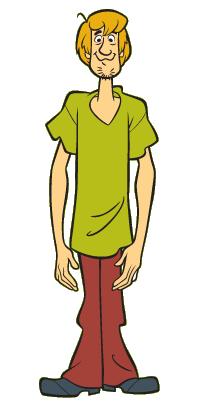
You know the scene. A pale-skinned thin male, looking like Shaggy from Scooby-Doo, sits in a café, wears skinny jeans and a turtleneck, and discusses the symbolism of the color blue in Shakespeare’s plays. When he begins to write, he pulls out a yellow legal and licks the tip of a ballpoint pen. Mostly, he stares off toward the front door.
Is that you?
Or are you the parent who tries to squeeze in 30-minutes of writing after the kids have gone to bed and your spouse has come back from the grocery store.
Writers have a distinct freedom all other art forms do not: We only need a computer. Sure, you could be like Legal Pad Scooby. Or like the accountant who has a fantasy novel in her. Or the high school baseball coach who has a great novel idea about a dance troupe.

Check out these writers who worked completely outside of that of a professional writer and are now part of the canon. I’m listing more than a token few because I want you to see the range of writers and their jobs. You could be on this list, no matter what you do for a living.
Agatha Christie, pharmacy assistant and nurse
Anne Rice, insurance claims examiner
Bram Stoker, business manager for a theater
Charles Bukowski, postal clerk
Charlotte Brontë, governess and teacher
Franz Kafka, insurance officer
Harper Lee, airline reservation agent
Herman Melville, customs inspector
Lewis Carroll, mathematics lecturer
Louisa May Alcott, civil war nurse, laundress, seamstress
Margaret Atwood, barista
Maya Angelou, streetcar conductor, cook, dancer
Octavia Butler, potato chip inspector, dishwasher, telemarketer
T.S. Eliot, banker
Wallace Stevens, insurance executive
William Carlos Williams, pediatrician
Zora Neale Hurston, anthropologist
I said that all we need is a computer. That’s not true. We also need that idea that needs to be written. We need time and a willingness to use that time to write.
When William Carlos Williams wrote poetry, he treated neighborhood children as a pediatrician. “The Red Wheelbarrow” only has 16 words and no punctuation, and yet, it nails how important a humble farm tool is.
The Red Wheelbarrow
so much depends
upon
a red wheel
barrow
glazed with rain
water
beside the white chickens
You might say, “Sure, Williams started as a doctor, but he wrote full time after that.” Nope. He stayed a doctor. Maybe that's because being a pediatrician paid better than being a poet. To paraphrase Steve Martin, “Nobody ever says, ‘Look, there goes the poet in his new Lamborghini!’”
Or he loved helping children. That’s good too.
The poem was published in 1923 as part of his collection Spring and All. In 1924, he became the chief of pediatrics at Passaic General Hospital. That’s about as real of a job as it gets. He worked hard. He retired in 1951 only because of the result of a stroke.
Persona
It’s not just about the job. It’s also about persona. Legal Pad Scooby projects a neo-bohemian affectation. He represents the stereotype of a coffeehouse poet.
I once exchanged several emails with Anne Rice, author of Interview with the Vampire, and had a net worth of $60 million when she died in 2021. Nothing in her email said, “I’m a rich, famous, and occasional controversial writer.” She came off as a human being, authentic, and modestly confident. She even had at least one typo. I’m sure she knew receiving emails from her was a thrill for another writer, but she never showed it.
No Just About New York
It used to be if you wanted to publish The Great American Novel, Your book needed to find its way to New York City. This is because the publishers were there and with the publishers, the agents. Publishers did exist in other major cities, but NYC was for authors what Hollywood is for actors (though Atlanta and Mumbai have nicked heavily into that).
It’s true that New York is still a key place for publishers, but someone living in Ankeny, Iowa can still be published without ever leaving home.
The" “Big Five” publishers: Penguin Random House, HarperCollins, Simon & Schuster, Hachette, and Macmillan—they are all in New York. You need find an agent who can live anywhere in the world. The traditional gatekeeping has leveled out. You do need find them, but there a combination of online and print resources they can send you in the right direction.
If you find that agent, it’s just a matter either emailing them or uploading your file to their website.
Sourcebooks, a strong outlier publisher, is based in a suburb just outside of Chicago. And like the rest, you can reach them through an agent.
That’s just six publishers. There are another 10 to 15 major publishers out there. Scholastic, Houghton Mifflin Harcourt, and W.W. Norton & Company, just for starters.
Break it down to the next level, and there are 400-600 mid sized publishers in the US. It depends how you count. If you are a reader, you’ve got their books on your shelf. Graywolf Press, Chronicle Books, Grove Atlantic, Algonquin Books, and Milkweed Edition, and so on. Add in micro-presses, and you can and maybe another 100,000. Yowza!
But wait! There’s more!
You’ve got the small presses as well. Well over 3,000 of those. That’s not counting the small presses which are functionally self publishing entities, like my own Tree Fort Books. Which brings us to…
Self-Publishing
Self-publishing used to be the realm of vanity publishing. It still can be, but it’s also become a legitimate part of the publishing world. They account for over two million new titles annually. And that’s just the ones with ISBNs. When you use Amazon's Kindle Direct Publishing (KDP), You can add in another couple of million titles.
There’s a lot to talk about when it comes to best practices, but you can easily publishing using KDP.
How easy? Got Microsoft Word? That easy.
All you need to do is upload the file, and fill out a form. You’ll need a cover for your book, but that's easy enough to manage as well.
Making it excellent is not as easy, and convincing other people to buy it is a lot more work than some people realize. Be sure to do your homework to understand the pros and cons of self-pubbing. You want to look into the real costs, like editors, designers, and marketing.
But it is available to you and plenty of people have made careers out of publishing their own books.
So What?
The so what is that no matter who you are, you can write. Whatever you do for a living, whether you wear skinny jeans or a sun dress or a double breasted suit, whether you drink coffee, tea, or milk, whether you live in New York City or tiny town USA, whether you are making $20,000 or $200,000 a year, whether you are someone famous or someone unknown, whether you… whether anything. You can do it.
Two Sentence Story Prompt
Here’s a quick prompt to push you forward.
A single mother balances her shifts at the diner and the warehouse while scribbling plot points on the backs of discarded receipts. She discovers that the stories she writes in the breakroom begin to appear as headline news the very next morning.
A Not Funny Joke
The Novelist’s Coffee Shop: A writer spent six hours at a local café today. He managed to delete three commas and change a “the” to an “a.” He calls it a highly productive Tuesday.